SPOTS 22
The 2022 round of SPOTS was the first HIV behavioural surveillance survey in Aotearoa New Zealand since 2014, and the first to be conducted under the SPOTS brand. It was led by Waipapa Taumata Rau University of Auckland (UoA) and the University of Otago, in partnership with community organisations and the HIV sector.
Continued behavioural surveillance is a key component of Aotearoa’s response to HIV. It allows us to monitor changes to risk in behaviours, identify inequities, and encourages engagement from communities in the HIV response. This allows us to direct funding and other efforts to the places that it is needed most.
SPOTS 22, and the resumption of regular surveying, was a significant milestone as it allowed us to take stock of the numerous changes in the HIV prevention, testing and treatment landscape since 2014, such as the public funding of PrEP and its anticipated impact on condom use, and the integration of HIV treatment options (treatment-as-prevention, U=U).
A major focus of the 2022 round was understanding how we can improve blood donation policy in Aotearoa for MSM. The study team worked with the New Zealand Blood Service to deliver research to inform changes related to moving towards a more individualised donor assessment (i.e., gender-neutral) approach. You can read more about the findings and results from this part of the study below.
Alongside these changes, SPOTS 22 also asked questions about COVID-19 vaccination status, and introduced the use of Dried Blood Spots (DBS) as a part of bio-behavioural surveillance programme to screen for undiagnosed HIV infections, syphilis, and hepatitis C. You can read more about the DBS below, and the complete list of questions can be found in the summary tables report.
SPOTS 22 was granted ethics approval by HDEC (2021 EXP 11450). If you have any ethical concerns about this research, you can contact the health and disability ethics committee (HDEC) on 0800 4 ETHICS or email them at hdecs@moh.govt.nz

Our partners for SPOTS 22


04/2022 - 08/2022

We’ve done so much with the data from SPOTS 22, and you can find more on our Findings page. We published eight peer-reviewed journal articles (with a few more in review and in preparation), 28 reports, research briefs, theses, policy submissions, 36 local and international conference presentations, and 33 invited seminars. Here’s a small selection.
SPOTS 22 Key Publications
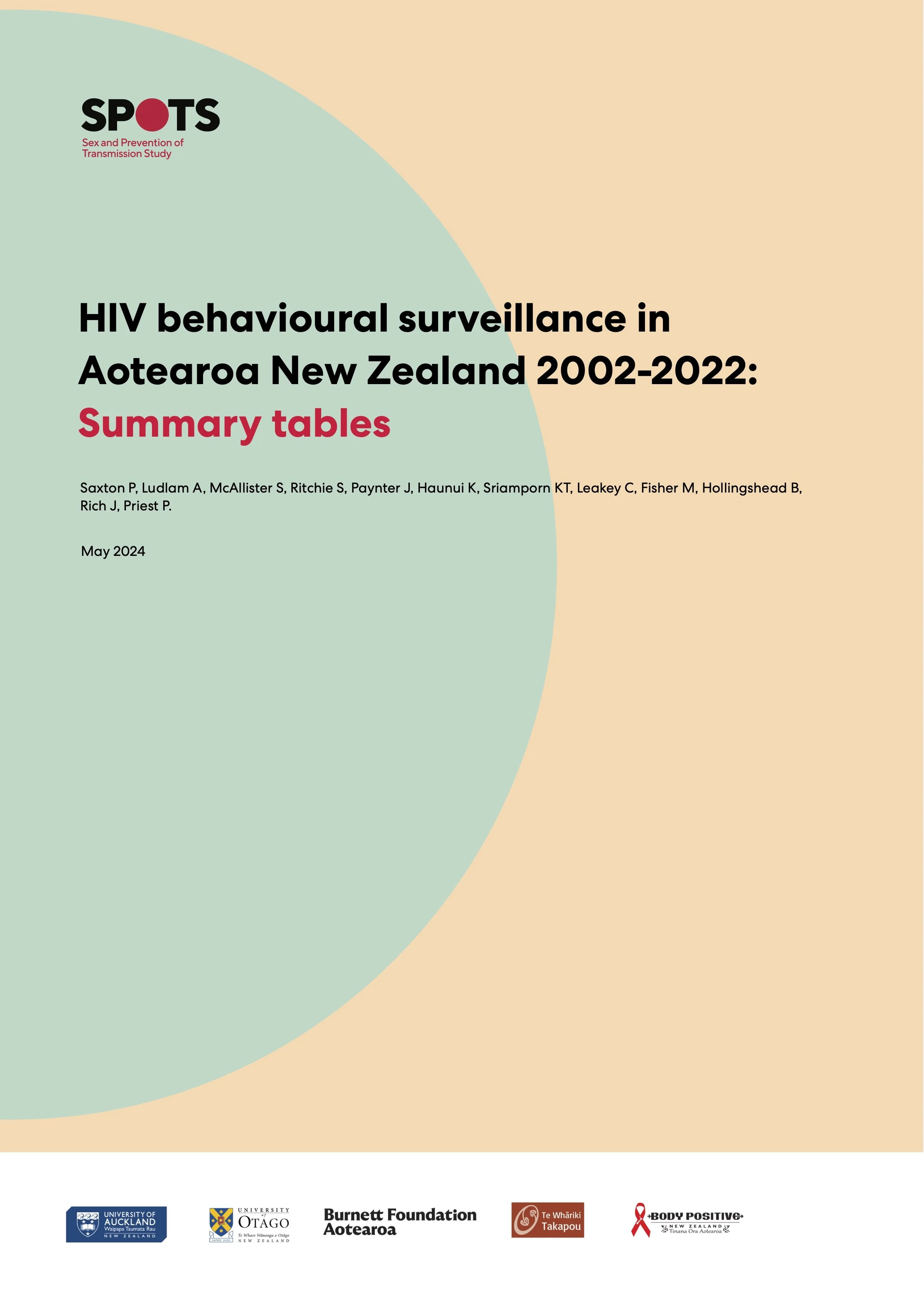
SPOTS 22 Summary Tables
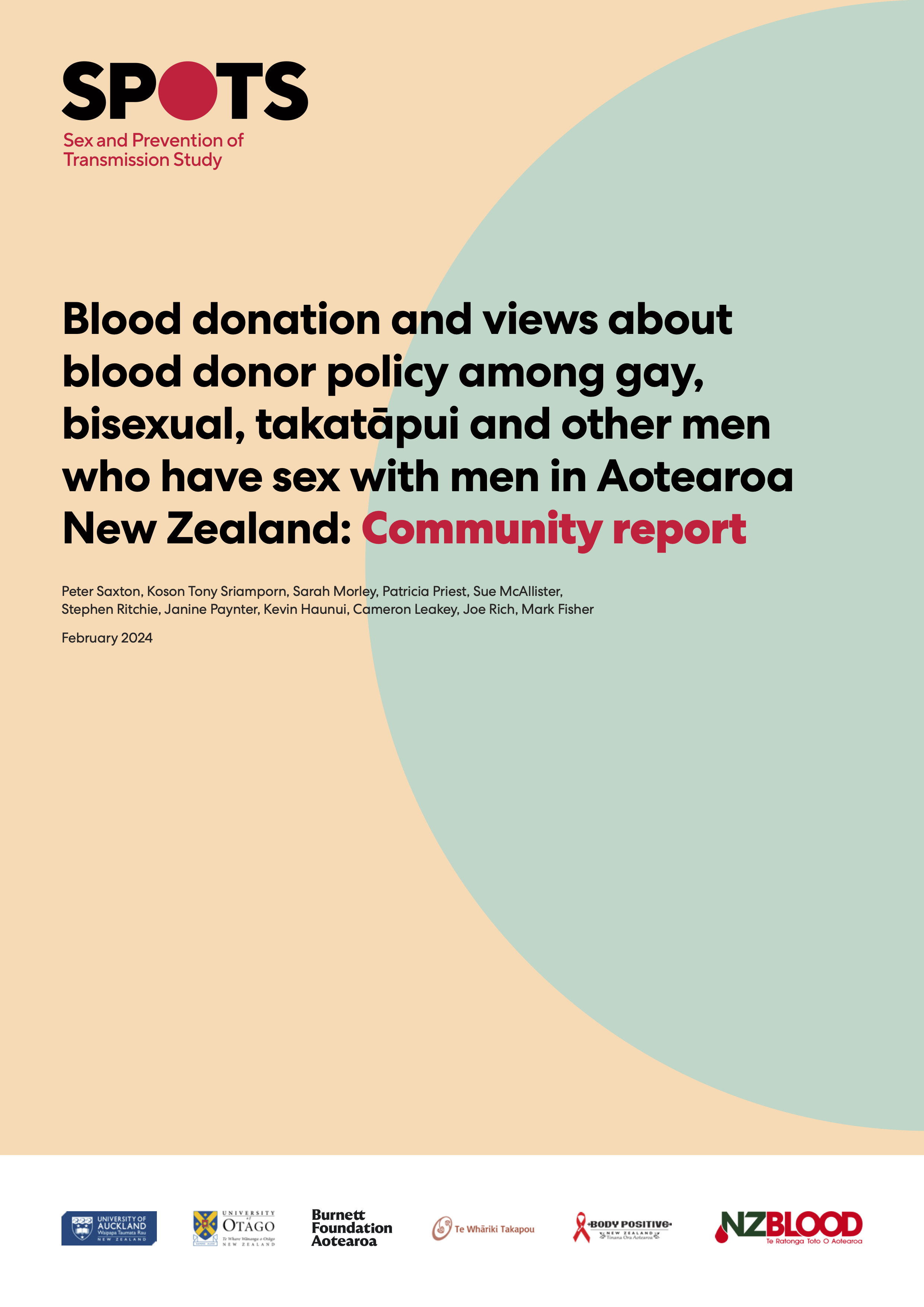
Blood Donation Community Report
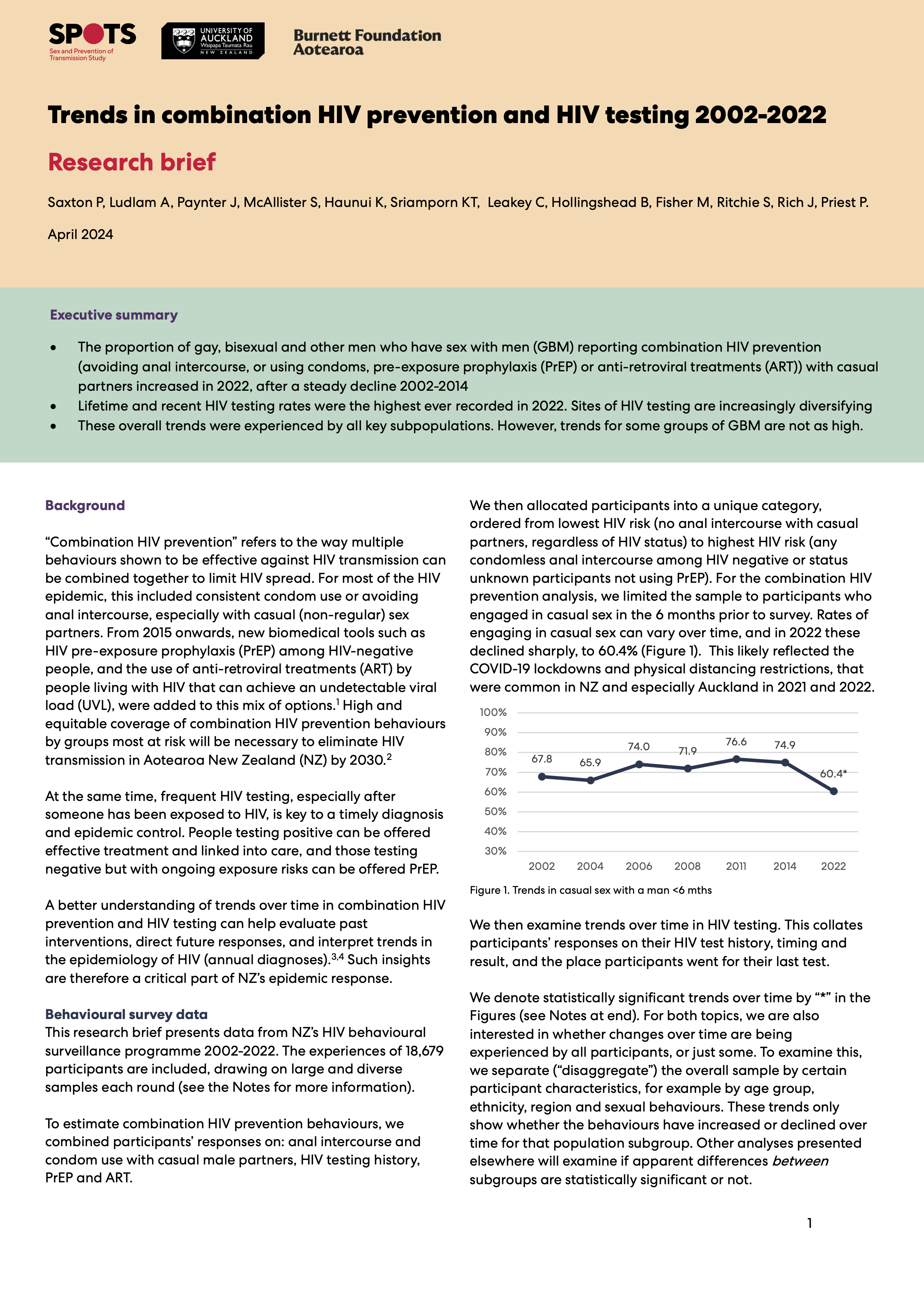
SPOTS 22 Research Brief
The Team
Joshua McCormack (University of Auckland)
Cameron Leakey (University of Auckland)
Tony Koson Sriamporn (University of Auckland)
Ricky Te Akau (Te Whāriki Takapou)
Dr Jacek Kolodziej (New Zealand AIDS Foundation)
Anthony Walton (New Zealand AIDS Foundation)
Shanjivan Padarath (University of Auckland)
All our incredible fieldworkers!
A/Prof Peter Saxton (Principal investigator; University of Auckland)
Prof Trish Priest (University of Otago)
Sue McAllister (University of Otago)
Dr Steve Ritchie (University of Auckland)
Dr Janine Paynter (University of Auckland)
Dr Sarah Morley (New Zealand Blood Service)
Kevin Haunui (Te Whāriki Takapou)
Dr Jason Myers (New Zealand AIDS Foundation)
Mark Fisher (Body Positive)
Find more information about the SPOTS 22 team here.
The Campaign
The SPOTS 22 campaign was originally planned for the 2022 pride season in Aotearoa (February-April). However, due to several outbreaks of COVID-19 and the need for physical distancing, the decision was taken to move the whole thing online, with DBS test kits mailed out to participants who were willing to complete one. The campaign began on the 26 April and ran until 4 August 2022.
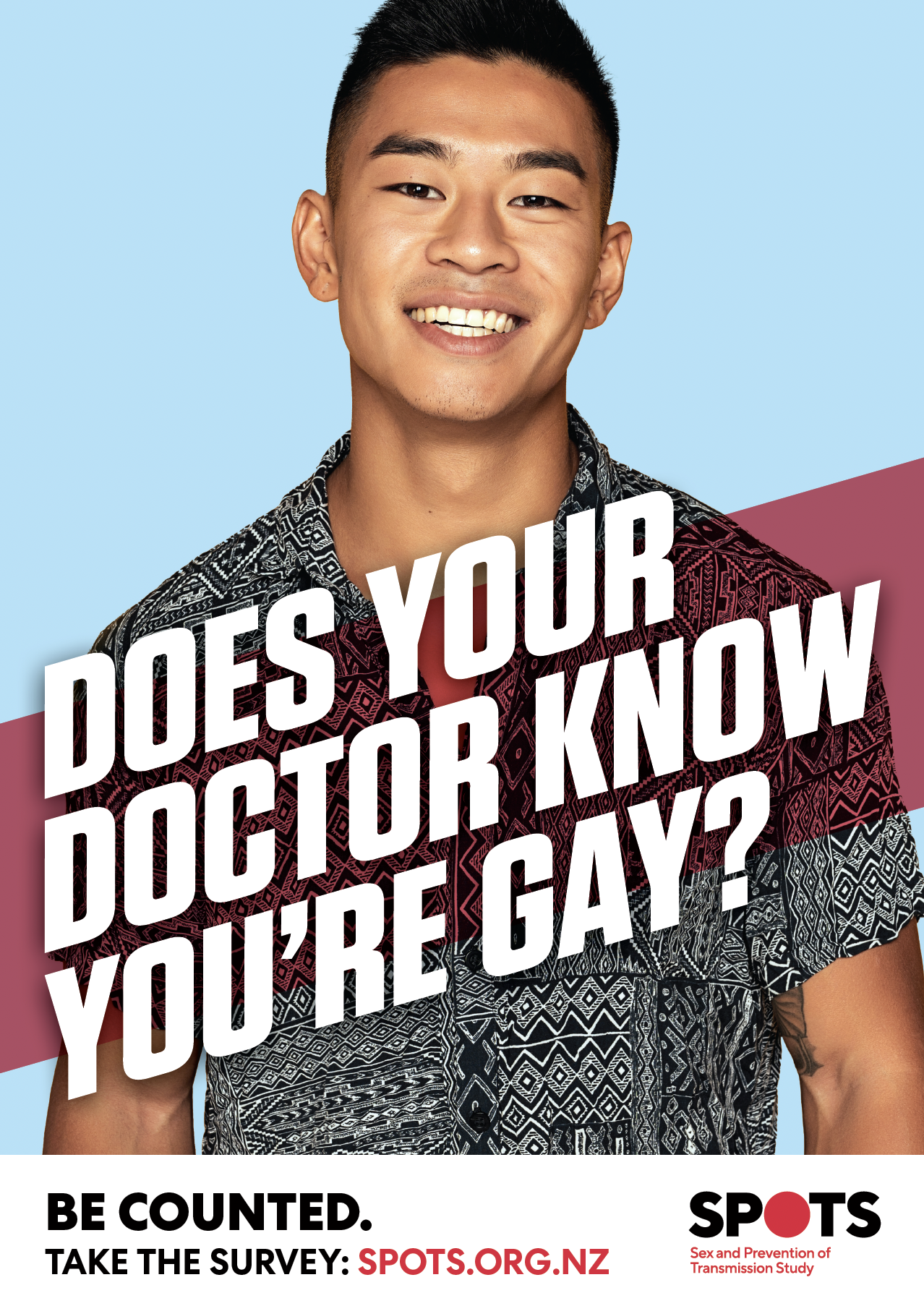
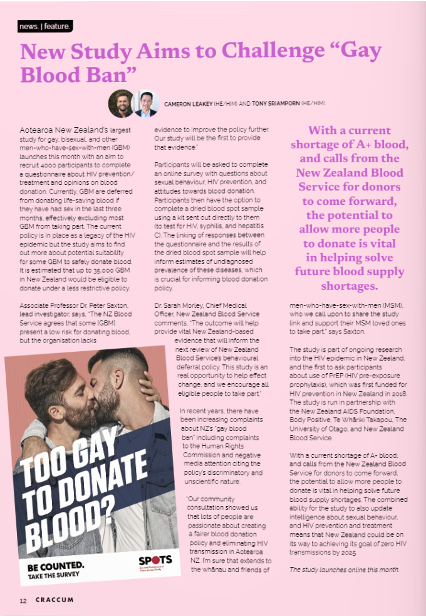
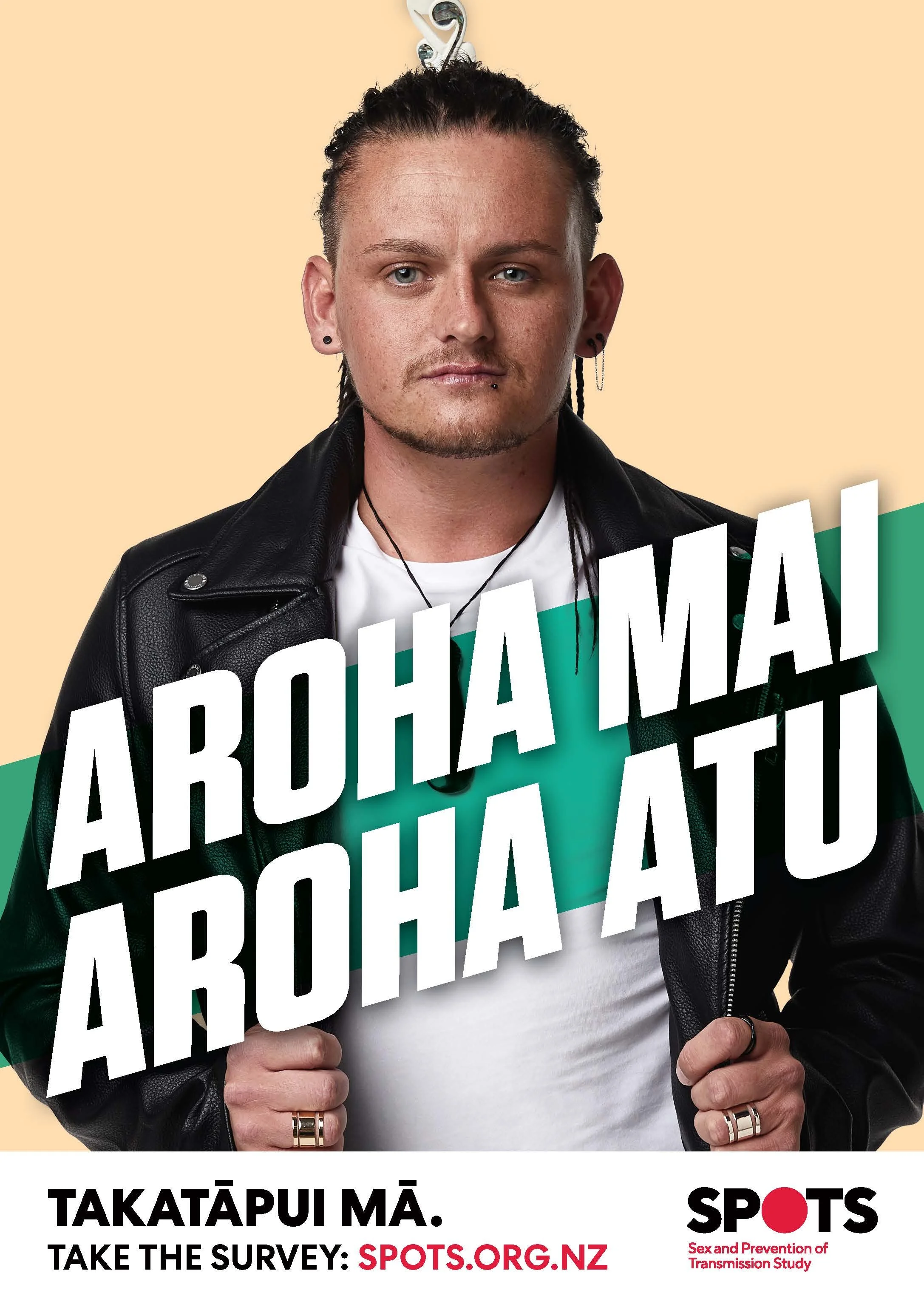
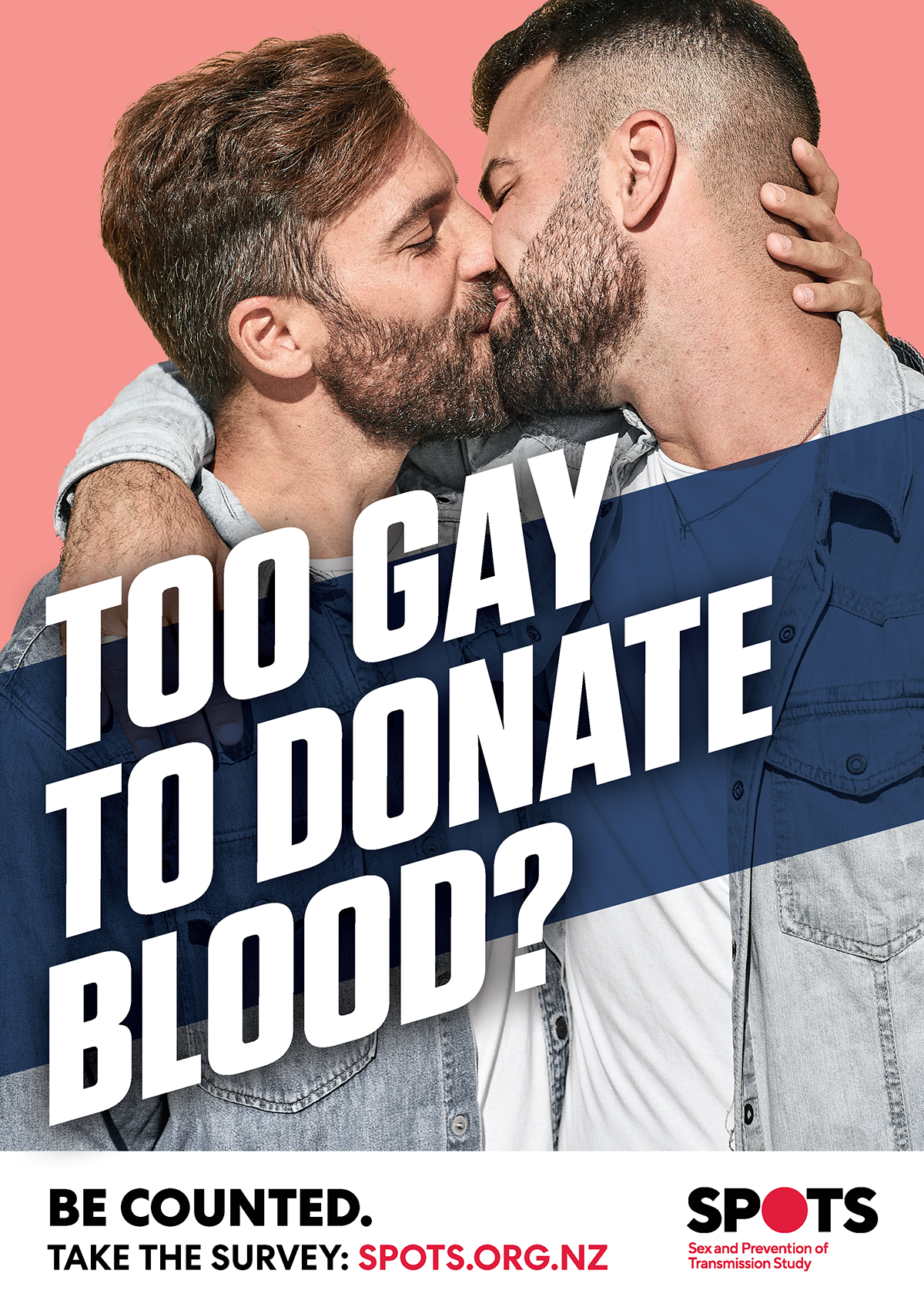
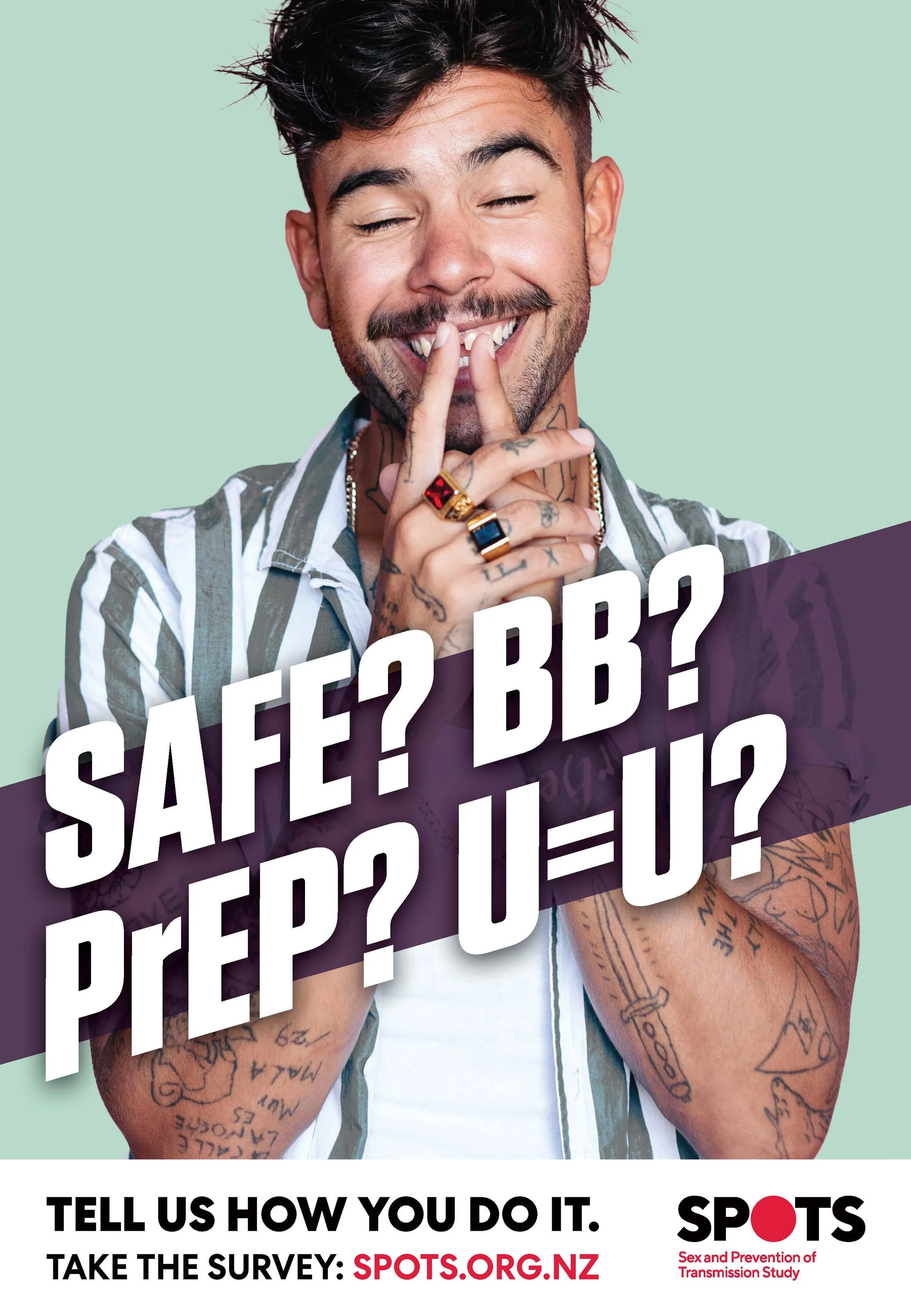
The team at UoA worked with the marketing team at New Zealand AIDS Foundation (now Burnett Foundation Aotearoa) to create a series of ‘hero posters’ (you can check them out below) to get the word out. The campaign was advertised across the motu, with online advertising on social media and other sites frequented by MSM. We also did a number of interviews, with Tony Fisher and Peter Saxton even going on Breakfast!
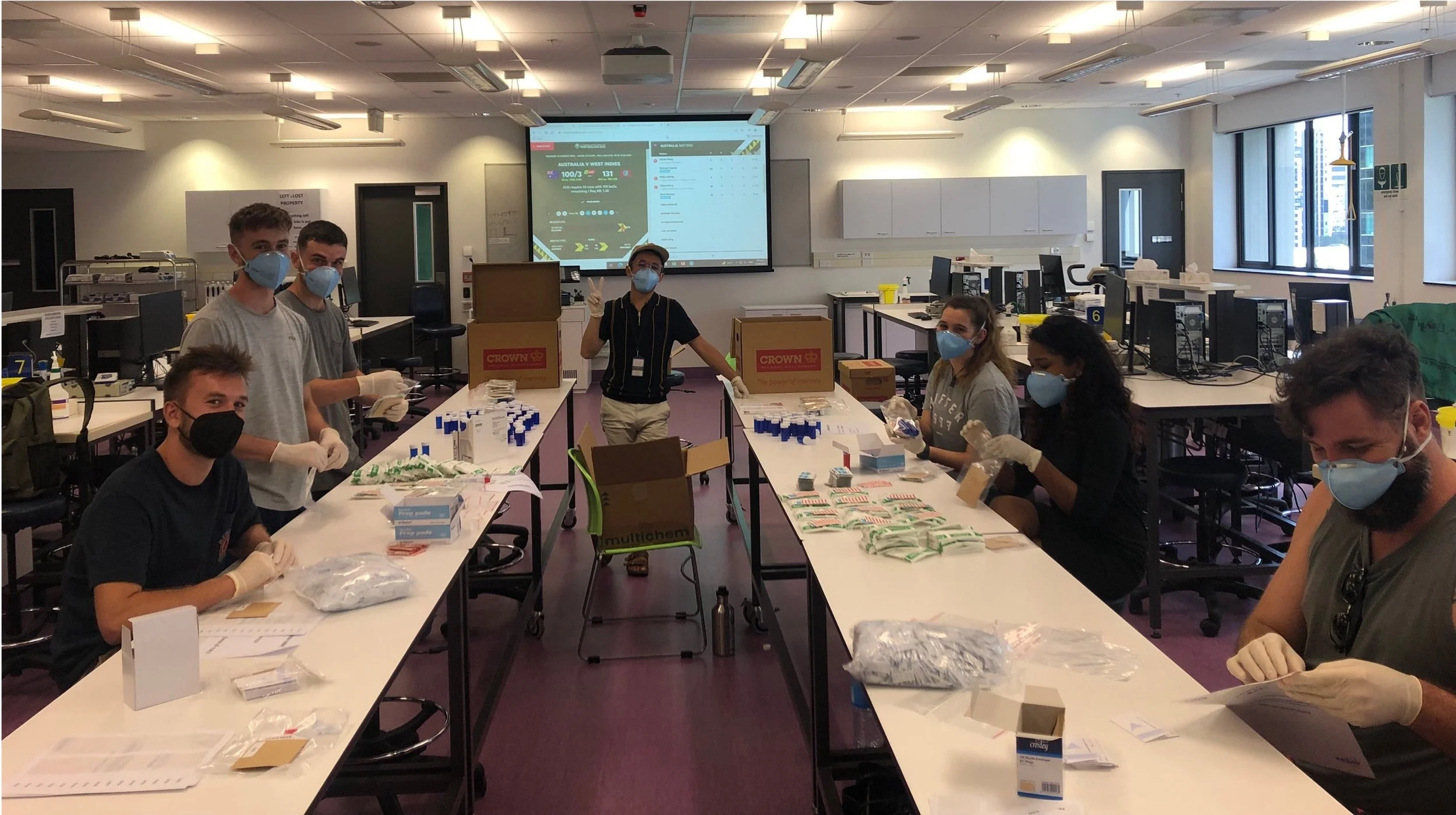
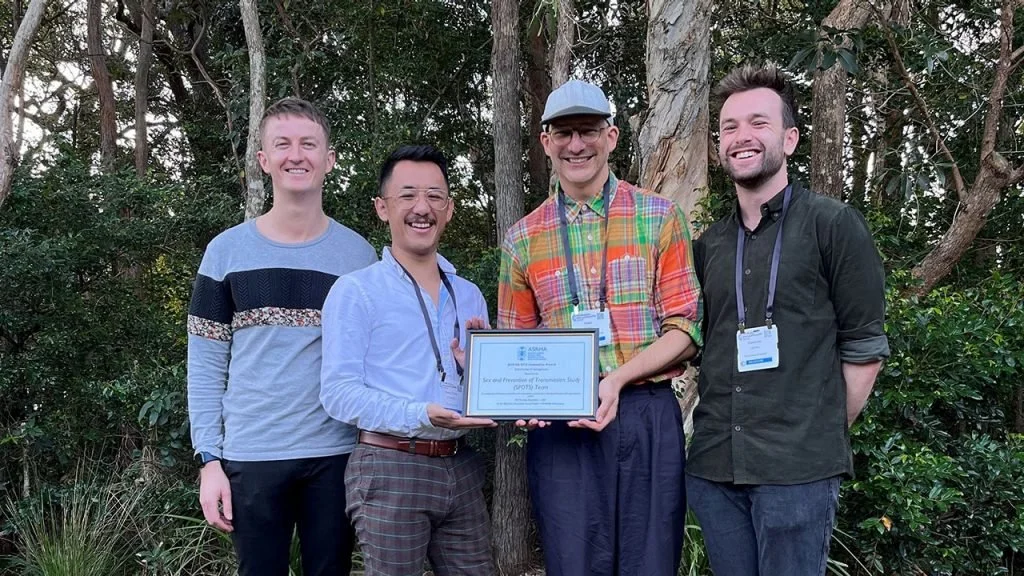
Shifting the survey to be entirely online was a challenge, especially the DBS collection. Many hours were spent by the team packing and sending out the DBS kits to participants under strict physical distancing requirements. For all the effort, SPOTS was awarded an Innovation Award at the 2022 joint Australasian HIV&AIDS and Sexual Health Conference. You can read more about the award here.

But it didn’t end there!
Over the course of this round, findings were presented back to the broader community through various channels. We presented at ten community hui and market stalls and created seven pamphlets and infographic posters for the purpose of sharing online. We also engaged the wider public about the study goals and key findings via 111 media interviews and articles (including TVNZ Breakfast, RNZ The Detail, Newsroom, NZDoctor, radio, print, and TV news) and two invited public presentations (e.g. “Raising the Bar” science communication series, Gus Fisher Gallery exhibition programme).
SPOTS 22 Hero Posters
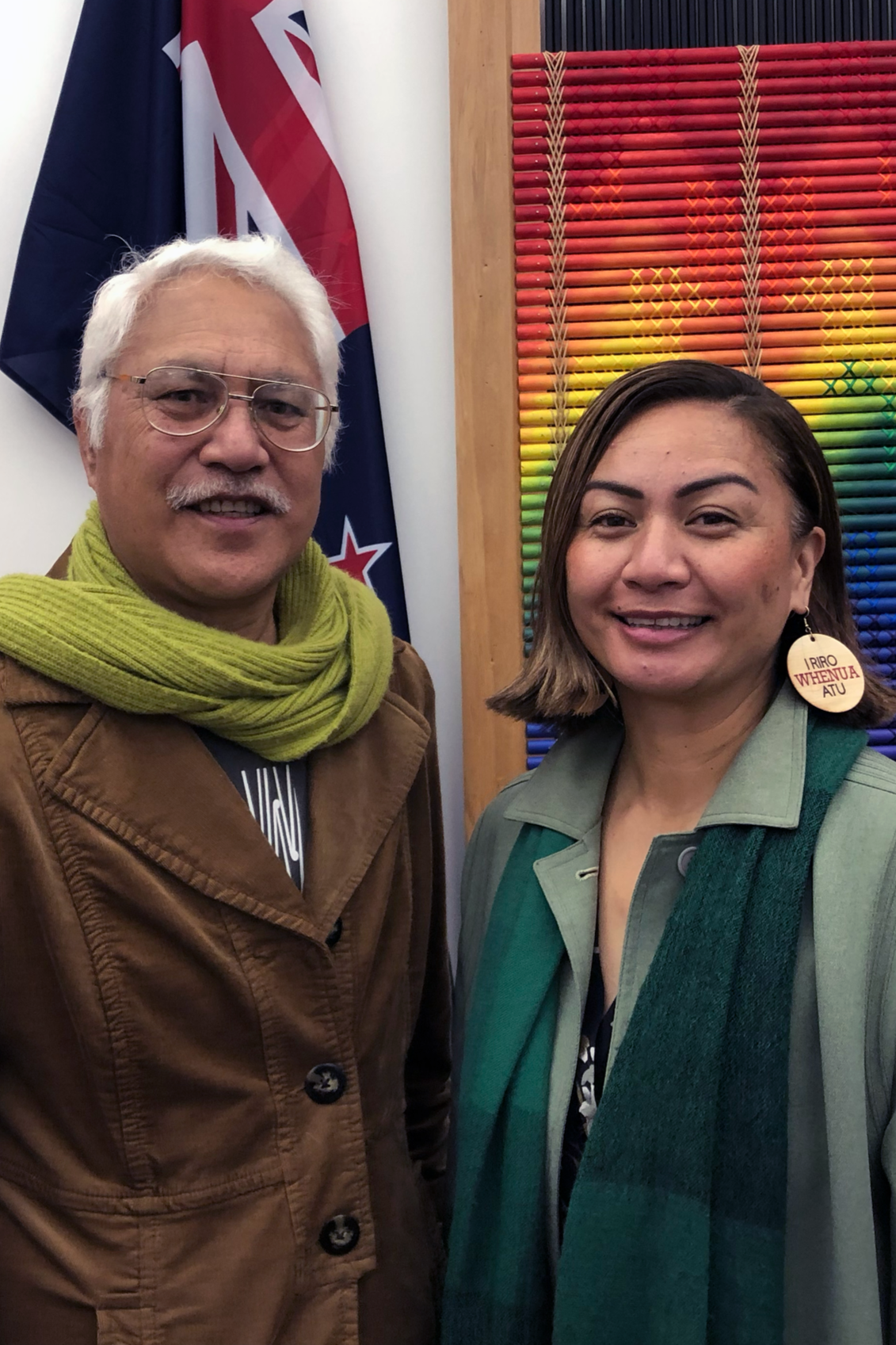
Images to the left, clockwise from top: SPOTS team accepting the Innovation Award, DBS distribution team preparing kits to be mailed out, SPOTS magazine article, Jamnes setting up to record the DBS kit video, Kevin and Marama Davidson on IDAHOBIT at Parliament.
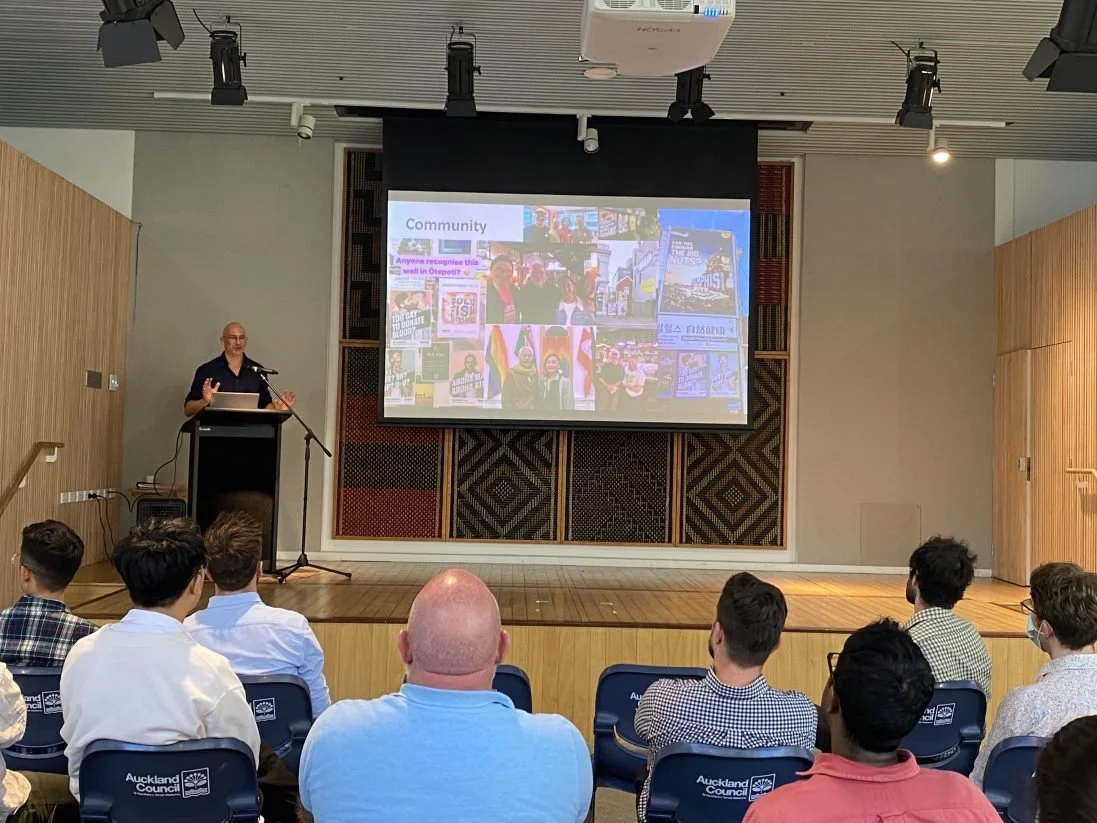
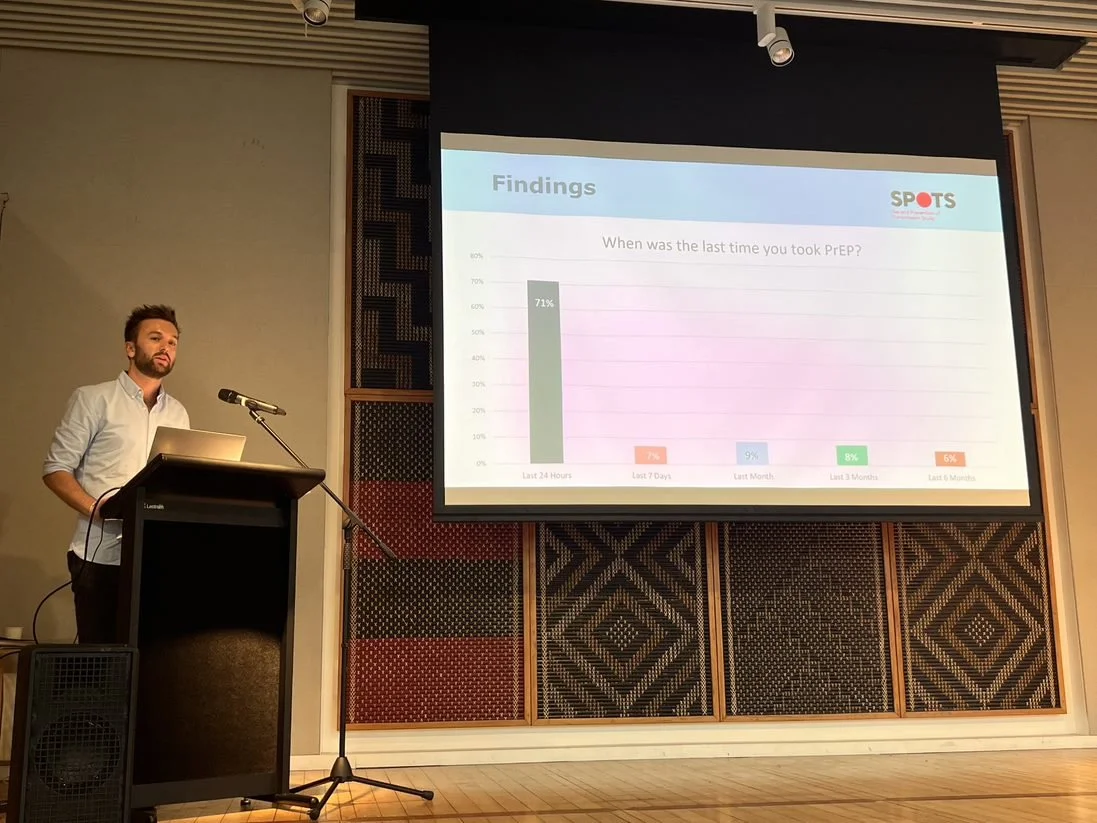
Peter and Cameron presenting at the community hui.
New Zealand Blood Service is one step closer to introducing individualised donor assessments
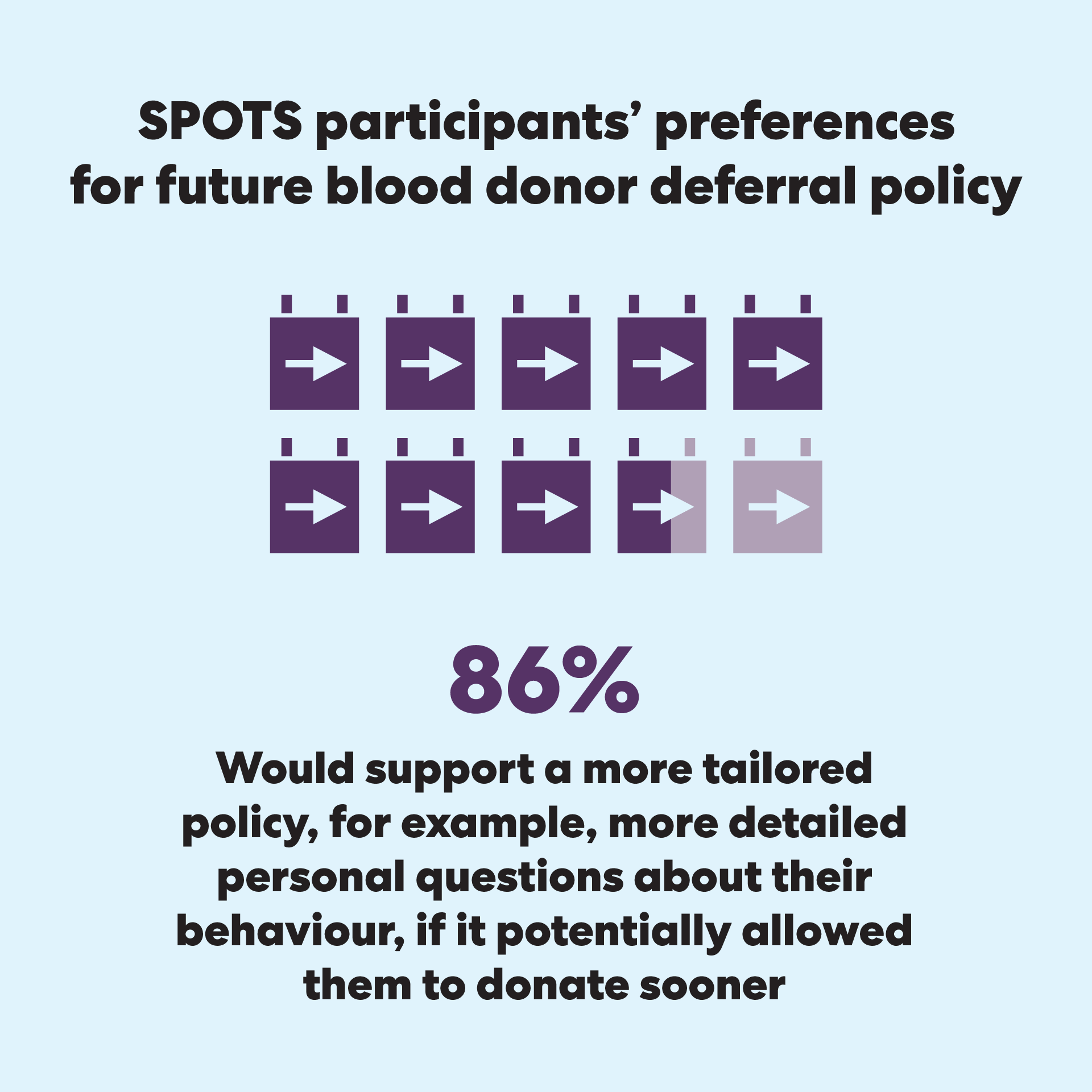
SPOTS worked with the New Zealand Blood Service to develop questions about blood donation for MSM in Aotearoa, related to the current 3 month deferral policy, desire to donate, and likelihood of becoming a blood donor under a variety of donor policy settings. We want to say a massive thank you to everyone who helped to create this report, including the 3,253 participants across the country who gave us their time and experiences through the survey.
A broad summary of the results can be found in the Community Report, while a more detailed breakdown of the findings is available through open-access publications led by Koson Tony Sriamporn’s doctoral research, which can be found here.
The evidence we gathered in 2022 has led to landmark changes in blood donor assessment policy in New Zealand. Supported by our report on blood donation among MSM in February 2024, the NZBS announced at the SPOTS Symposium that they had been granted MedSafe approval to move to an Individual Donor Assessment model in 2025. This change was confirmed on the 28th April 2026. This change comes into effect on the 4th May 2026. To read more about this, please read the NZBS press release (link pending).
Dried Blood Spot Testing
Alongside the questionnaire, SPOTS also collected biospecimen samples. In earlier rounds, we used tests that required saliva/spit samples. However, for the 2022 round, we shifted to dried blood spot (DBS) testing (and yes, this is where our name comes from!). DBS testing requires participants to place five drops of blood from their fingertip onto a card, allow the spots to dry, and then return the card for laboratory analysis. We set up a website to help participants collect their sample including instructions and videos, you can read it here.
Overall, 52% of participants agreed to receive DBS testing kits, of which 48% were returned to the laboratory for HIV, syphilis, and hepatitis C screening. The results of these tests are currently being prepared for publication, and a manuscript assessing the viability of at‑home DBS testing kits is currently under review.
James Ballantyne explaining how to use the DBS tests. This video was also produced in Te Reo Māori, including in Ngāi Tahu Mīta.